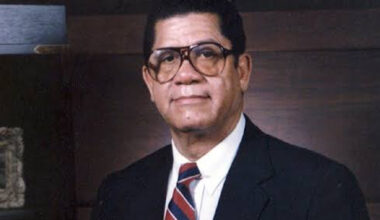
A concise portrait
Denise Shillue is a figure who inhabits the quieter margins of public life: visible enough to be associated with a well-known media personality, but resolute in keeping her own story primarily in professional and family spheres. Working in nonprofit operations and described in public professional listings as Head of Operations for a U.S. research-and-support foundation, she combines administrative rigor with a private, family-centered presence. Married in the early 2000s and a mother of two daughters, she is often mentioned alongside her husband in media profiles, yet she remains a person in her own right — organized behind the scenes, steady in the spotlight’s periphery.
Basic information
| Field | Detail |
|---|---|
| Full name (public summaries) | Denise Shillue (frequently referenced as Denise Ann Belvedere in secondary bios) |
| Professional role | Head of Operations — U.S. nonprofit (operations, administration) |
| Known family connections | Spouse: Tom Shillue (comedian, TV/radio personality) |
| Marriage date (reported) | February 23, 2003 |
| Children | Two daughters |
| Public profile | Private individual; mentioned in media chiefly in relation to family and nonprofit work |
| Public activity window | 2000s — 2020s (professional listings and media references) |
Professional life: operations as craft
Denise’s public footprint is most tangible in the language of organizational management: operations, administration, program support. There is a particular clarity to work that manages the levers behind mission-driven organizations — budgets, processes, compliance, personnel coordination. In that sense, her role reads like the engine room of a nonprofit: rarely flashy, always necessary.
Numbers help explain the stakes of such work. A small-to-mid-size U.S. nonprofit typically manages:
- Annual budgets ranging from the low six-figures to several million dollars;
- Multimodal fundraising streams (individual donors, grants, events);
- Compliance across state and federal reporting periods (quarterly/annual filings);
- Cross-functional teams (program, fundraising, communications, volunteers).
Running operations in that environment requires precision and a tolerance for detail. If a charity is a ship, operations is the engine compartment — unseen by many, but fatal if neglected. Denise’s publicly listed role places her in that engine room: coordinating the mechanical heart of mission delivery so researchers, clinicians, or family-service staff can do their outward-facing work.
Family and personal life: the private axis
Denise is primarily referenced in public discourse in relation to her family. Married in 2003, she and her husband have raised two daughters. The dynamic described in interviews with her spouse and in public profiles is one of partnership — a backstage sense-making of careers, parenting, and public life.
Family life, in this telling, appears deliberately ordinary: shared routines, the balancing of careers and children, a mutual commitment to private household rhythms. The family occupies common cultural roles — spouse, parent, supporter — without courting celebrity for its own sake. This deliberate privacy is itself a kind of statement; it chooses depth over display.
Public mentions and media context
Denise is not a media subject in her own right. References to her are typically embedded within interviews, profiles, or biographical listings about her husband. In those moments she is invoked as a person who helps sustain family life, supports a partner whose work requires public performance, and carries a parallel professional life committed to nonprofit goals.
Two patterns appear in the public trail:
- Professional listings that identify a nonprofit operations leader with a clear title and responsibilities.
- Media references to family life — short, personal mentions that highlight parenting and marriage without probing private specifics.
Together these patterns sketch a profile of someone who navigates public association with discretion.
Timeline: public milestones and markers
| Year / Date | Event |
|---|---|
| 2003-02-23 (reported) | Marriage to Tom Shillue. |
| 2010s–2020s | Ongoing public presence of spouse in media; periodic mentions of family life in interviews. |
| 2010s–2020s | Professional listings and profiles note a nonprofit operations role during this period. |
These milestones are markers, not a full autobiography. They show where Denise’s public presence intersects with family and career nodes, and they leave wide areas of private life intentionally unlit.
How she appears to operate — style and values
There is a practical poetry to operations work that suits someone who prefers substance over spectacle. Consider these qualities, inferred from the role and pattern of mentions:
- Methodical — operations requires systems that can be replicated and audited.
- Discreet — privacy is upheld; public commentary is minimal.
- Supportive — family references emphasize partnership.
- Mission-oriented — nonprofit operations centers the organization’s goals above personal publicity.
Metaphorically, she functions like a backstage manager at a theater: no curtain call, but without her cues would be missed, costumes misplaced, performances falter. The show goes on because someone keeps the props sorted, the timing precise, the payroll set.
Numbers and facts to anchor the narrative
- Marriage: reported in 2003 (a fixed reference point in public biographical compilations).
- Children: two daughters (the family unit size is repeatedly noted in interviews and profiles).
- Career window: public references to a nonprofit operations role span the 2010s into the 2020s.
These concrete details form the scaffolding of a public profile: not exhaustive, but reliably present in the small set of places where Denise is named.
Final portrait (open, not concluding)
Denise Shillue’s public outline is spare by design. She inhabits two worlds: the exacting world of nonprofit operations, where spreadsheets and processes move quietly but decisively; and the private sphere of family life, where partnership and parenting take center stage away from headlines. Her presence in public records reads like a steady hand — not a banner, but a backbone. The story available to the public is therefore partial: measured, factual, and intentionally reserved, like a room with the curtains drawn but the lamp on inside.