A concise portrait
Wahida Djebbara occupies a distinct place in the public story of one of France’s most discussed footballers. Not defined by headlines of her own making, she is best known as a mother, a steady presence and the quiet center of a large family whose name has become familiar on pitches, in press galleries, and in public conversation. Her life — sketched most often through the achievements and visibility of her children — reads like the foundation stone of a broader household narrative: roots in Algeria, a life in Lyon, and ties to a family of nine children that produced a global sports figure.
Basic information
| Field | Information |
|---|---|
| Full name | Wahida Djebbara |
| Public role | Mother / family matriarch |
| Place raised | Lyon, France |
| Family origin | Algeria (Oran / Bejaia region connections) |
| Partner / husband | Hafid Benzema (reported) |
| Notable child | Karim Mostafa Benzema (born 19 December 1987) |
| Number of children in household | 9 (Karim is one of nine siblings) |
| Public career | No independent public professional profile widely reported |
Early life and family roots
Wahida’s family story is braided with migration and settlement. The Benzema family’s Algerian origins — including links to Oran and the broader Bejaia/Tigzirt area — precede Wahida’s generation, with migration to France occurring in waves around the mid-20th century. Wahida herself is described in public profiles as having been born and raised in Lyon, a city that became the backdrop for her family’s life and for the upbringing of nine children.
Numbers anchor this part of the story: 1 city (Lyon), 1 country of origin (Algeria), and a household of roughly 9 children. Those figures map a life that is domestic and communal, a compact universe in which family roles and support structures are central.
A family of nine: names, roles, and public presence
The Benzema household is large by most measures: nine children, several of whom have appeared in public conversation beyond the home. At the center of the public story is Karim Benzema, born 19 December 1987, whose rise in professional football has cast a long shadow and brought repeated attention to his family.
Below is a concise table of names and notes as they frequently appear in public profiles and media mentions. Reporting on some names is mixed across outlets, so the list below captures the most commonly cited names while noting variability.
| Sibling / Family Member | Reported role / note |
|---|---|
| Karim Mostafa Benzema (b. 19 Dec 1987) | Eldest son and internationally known footballer |
| Gressy Benzema | Reported brother; public references as family member |
| Sabri Benzema | Reported brother; associated with football locally |
| Farid | Appears in several family lists |
| Lydia | Appears in several family lists |
| Nafissa | Appears in several family lists |
| Laeticia | Appears in several family lists |
| Sofia | Appears in several family lists |
| Celia | Appears in several family lists |
A word on reliability: the precise roster of siblings is repeated across many biographical sketches and fan pages, but not every name is confirmed by an official family statement. The arithmetic — nine children — is consistent; the roster of names is where variation appears.
Public appearances, milestones, and the media lens
Wahida’s appearances in public are generally tied to family milestones and to moments when Karim’s career placed the family in a brighter spotlight. A few recurring moments stand out numerically and chronologically:
- 1950s–1960s: The family’s migration history begins to take shape in this era, with earlier generations moving from Algeria to France in the postwar decades.
- 19 December 1987: The birth of Karim Mostafa Benzema, a date that anchors the family timeline.
- 2020: Notable media coverage around family gatherings and personal celebrations, including public visibility around Wahida’s birthday.
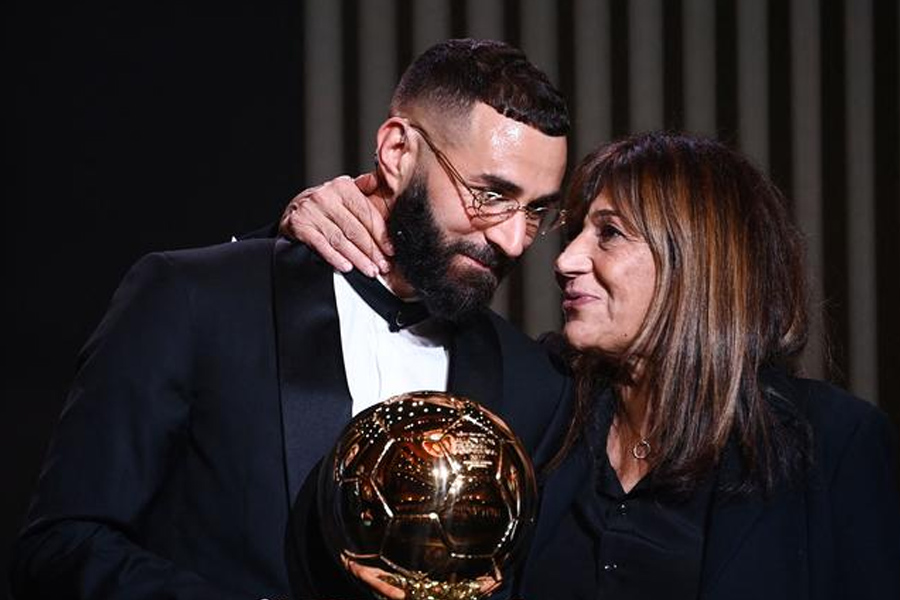
- 2022: Peak global attention as Karim won major individual honors; photographs and press items from this period show family presence and identify Wahida by name in profiles and event coverage.
These milestones map a public rhythm: private family life punctuated by public peaks when a child’s achievements create a wider spotlight. Wahida moves through that rhythm as a maternal figure — present in photographs, named in profiles, rarely the subject of feature-length biographies.
Portrait in numbers
| Metric | Value |
|---|---|
| Children in household | 9 |
| Karim’s birth year | 1987 |
| Years since Karim’s birth (as of 2025) | 38 |
| Decades of family migration history referenced | 2 (1950s–1960s and onwards) |
| Notable public visibility spikes | 2020, 2022 |
Numbers are an anchor here: they do not tell the private textures of daily life, but they do give structure to the public record. Nine children, 38 years since Karim’s birth, and two decades of increased public visibility — those figures are the arithmetic of family presence.
Public identity and private gaps
If Wahida’s public image were a photograph, it would be a cropped portrait: clear enough to see her role in the family, but missing the wider background that would reveal daily work, personal interests, or a separate public career. Public reporting tends to treat her as a familial figure rather than an independent public actor. That has two effects: first, it preserves a degree of personal privacy; second, it leaves gaps in the public record — no publicly verified birthdate for Wahida, no widely reported independent career, and no formal financial profile.
In this way, Wahida’s public identity resembles a quietly lit stage set: essential to the scene, rarely the actor who takes center stage. The spotlight moves across her when family events necessitate it; otherwise the life behind the light remains largely private.
A human sketch in brief
Wahida Djebbara is less a headline and more a recurring refrain in a larger family song. She stands, in public depiction, as the mother of a world-class athlete and the matriarch of a large, tightly knit household with deep roots reaching back to Algeria and branches that grew in Lyon. Numbers and dates — nine children, a 1987 birth, public mentions in 2020 and 2022 — give shape to the story, but they do not flatten it. The family is both a unit of statistical facts and a constellation of private relationships: every photograph of Wahida at an event is a small compass pointing back to a life that, while partially visible, remains principally domestic and familial.