Basic Information
| Field | Details |
|---|---|
| Full name | Ronald Lewis “Ron” Edgeworth |
| Born | January 29, 1938, East Ham, Essex, England |
| Died | December 10, 1994 (age 56), from motor neurone disease |
| Occupation | Pianist, composer, actor, musical director |
| Spouse | Judith Durham, married November 21, 1969 |
| Children | None |
| Notable recordings | The Hot Jazz Duo (1979) with Judith Durham |
| Television credits | Composer and performer on shows including Cash and Company (1975) and Raw Deal (1977) |
| Residences | United Kingdom, Switzerland, Australia |
| Burial | Springvale Botanical Cemetery, Victoria, Australia |
| Siblings | Younger brother Patrick Edgeworth (born 1942) |
Early Life and Musical Beginnings
Ron Edgeworth arrived into the world in 1938 in East Ham, a neighbourhood that shaped the rhythm of his earliest years. He was the older of two sons and the son of a working class English family. Music entered his life young; the piano became a confidant and a workshop where he learned harmony and timing. In the 1950s and 1960s he cut his teeth in variety shows and played with groups that moved between nightclubs, TV studios, and the itinerant life of working musicians. He was a craftsman before he was famous, polishing skill in long sessions and late-night gigs.
Numbers anchor his early arc. By his mid 20s he had already joined groups like The Trebletones and had begun freelancing in London, a city that then thrummed with new sounds. Those formative decades taught him to listen as much as to play, a trait that later defined his role as musical director.
Career and Collaborations
Edgeworth never chased the spotlight for its own sake. His career reads as a ledger of service to music and to singers who needed a steady hand. He moved from performing to arranging and directing, taking particular pride in shaping other voices. The most important of those collaborations began in the late 1960s.
In 1968 he became Judith Durham’s musical director, pianist, and arranger after she left the group that made her famous. The partnership was practical and lyrical at once: he provided musical scaffolding while she supplied the song. In 1979 the pair released The Hot Jazz Duo, a collection that showcased his tasteful arrangements and her warm voice. Television work followed, including composing for and appearing on Australian series in the mid 1970s, where he combined acting, playing, and writing for the screen.
Throughout the 1970s and 1980s Edgeworth and Durham moved between countries. They maintained homes in the United Kingdom, Switzerland, and Australia, which speaks to a life lived across latitudes and musical cultures. In the 1980s the couple based themselves on Queensland’s Sunshine Coast, performing in venues such as The Troubadour in Melbourne during 1987 and 1988.
Marriage and Family Life
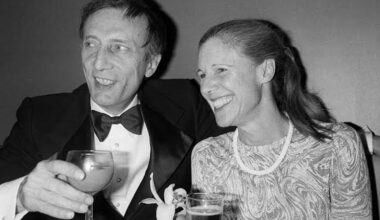
Marriage reshaped his life as much as did the shift from club piano to concert halls. Ron and Judith were married on November 21, 1969, at Scots Church in Melbourne, with his brother Patrick as best man. That 1969 date marks the point where two careers and two lives braided together.
The household they built was quiet and private. The couple embraced a vegetarian lifestyle, and later Judith adopted veganism. They had no children, and that absence allowed them to concentrate on music and travel. Ronald’s younger brother Patrick emigrated to Australia in 1969 and established a career in theatre and television, adding a sibling echo to the family’s artistic footprint.
Family ties were close. Patrick Edgeworth, born in 1942, remained a consistent presence, writing and producing works that sometimes referenced the family’s shared history. A sister-in-law, Susie Edgeworth, appears in family photos from the 1970s, and at times the families lived near one another when life took them to places like Beverly Hills.
Creative Output, Acting, and Recording
Ron’s creative life was not limited to piano solos. He composed for television, acted in series, and co-created performances with Judith that blended jazz, pop, and spiritual hymns. The Hot Jazz Duo album remains a compact, luminous statement from 1979, featuring numbers such as Just a Closer Walk With Thee and My Buddy, where his arranging skills are evident.
His television credits include composing for Raw Deal in 1977 and contributing both performance and songs to Cash and Company in 1975. Those credits place him in the mid 1970s Australian screen world, where music and narrative often intersected.
Although he did not seek standalone fame, his fingerprints are on many moments: piano fills that lift a chorus, arrangements that reshape a standard, and on-stage chemistry that made duo performances feel intimate and immediate.
Illness, Final Years, and Passing
Diagnosis came at an unforgiving pace. In 1993, while The Seekers were on a reunion tour, Ron began to show the signs that would be diagnosed as motor neurone disease. The disease progressed rapidly. He died on December 10, 1994, at the age of 56. His last years were marked by courage, and by Judith’s steadfast care.
Numbers are stark here. From diagnosis to death the span was about one year, a condensed final chapter that transformed grief into advocacy. After his death Judith channelled remembrance into fundraising for motor neurone disease, pulling the private into public service.
Legacy and Recent Mentions
Edgeworth’s legacy is an echo rather than a headline. He remains best known as Judith Durham’s partner in life and music. Recordings and videos preserve the warmth of their collaboration. In recent years, nostalgic tributes and archival posts have resurfaced performances, wedding footage, and tracks from their duo album. These fragments of sound and picture keep him present in smaller, determined ways.
His life can be read as a bridge. He connected English variety traditions to Australian stages, and private artistry to public performance. He was the steady wheel behind a bright singer, the unseen hand that set a melody in motion.
Timeline
| Year | Event |
|---|---|
| 1938 | Born January 29 in East Ham, Essex, England |
| 1942 | Younger brother Patrick born |
| 1950s to 1960s | Performed in variety shows and with groups including The Trebletones |
| 1968 | Became Judith Durham’s musical director and arranger |
| 1969 | Married Judith Durham on November 21; Patrick emigrated to Australia as best man |
| 1975 | Performed and contributed music on TV series Cash and Company |
| 1977 | Composed for Raw Deal and made other television contributions |
| 1979 | Released The Hot Jazz Duo with Judith Durham |
| 1987 to 1988 | Performed at The Troubadour in Melbourne |
| 1993 | Diagnosed with motor neurone disease during The Seekers reunion tour |
| 1994 | Died December 10 at age 56; interred at Springvale Botanical Cemetery |
Family Members
| Name | Relationship | Notes |
|---|---|---|
| John Edgeworth | Father | Little public information; working class background |
| Vera Edgeworth | Mother | Little public information |
| Patrick Edgeworth | Younger brother | Born 1942; playwright and screenwriter; emigrated to Australia in 1969 |
| Susie Edgeworth | Sister-in-law | Married to Patrick; appears in family photographs |
| Judith Durham | Spouse | Married 1969; lead singer of The Seekers; lifelong musical partner |
FAQ
Who was Ronald Edgeworth?
Ron Edgeworth was an English pianist, composer, actor, and musical director best known for his musical partnership and marriage to Judith Durham.
When was he born and when did he die?
He was born January 29, 1938, and died December 10, 1994, at age 56.
What was his most notable recording?
His most notable recording is The Hot Jazz Duo, released in 1979 with Judith Durham.
Did he have children?
No, Ron and Judith had no children.
What caused his death?
He died from motor neurone disease, also known as ALS.
Where is he buried?
He is interred at Springvale Botanical Cemetery in Victoria, Australia.
Did he work in television?
Yes, he composed for and appeared in Australian television series in the 1970s, including Raw Deal and Cash and Company.
Who is Patrick Edgeworth?
Patrick is Ron’s younger brother, born in 1942, who became a playwright and screenwriter and moved to Australia in 1969.