Basic Information
| Field | Details |
|---|---|
| Full name | Deljeet Kaur Manak O Ree |
| Known as | Spouse of Willie O Ree; family representative in public appearances |
| Origin | Duncan, British Columbia, Canada |
| Ethnicity / Community | South Asian; Sikh / Punjabi heritage |
| Immediate family | Husband: Willie O Ree; Daughter: Chandra O Ree |
| Parents | Rajinder Kaur Manak (died January 2011), Karm Singh Manak (predeceased 2000) |
| Public profile | Appears primarily in family and community contexts; featured in community book Zhindagee |
| Notable public dates associated with family | Willie O Ree NHL debut January 18, 1958; Willie Hall of Fame induction 2018; Boston Bruins jersey retirement January 18, 2022 |
A Portrait in Context
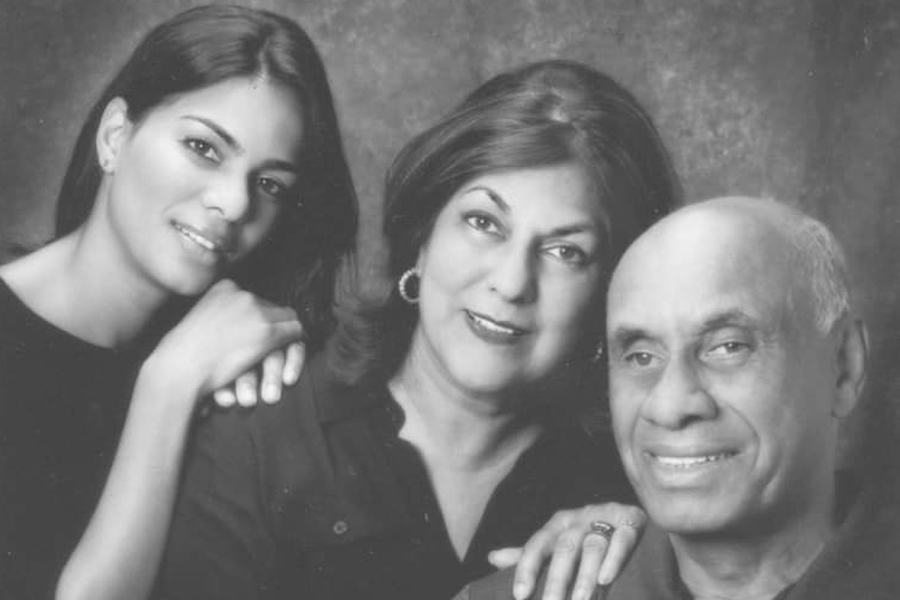
Deljeet Kaur Manak O Ree appears in public life as a quiet fulcrum within a story that belongs to a broader arc of sports, community, and family memory. She is not presented as a celebrity in her own right. Instead she is a steady presence who stands beside one of hockey history’s milestone figures, and who embodies a family line rooted in Duncan, British Columbia. Think of her role as the anchor of a boat: not always in the headlines, but essential to keeping the craft steady when the winds change.
Her public image is compact and precise. It is made up of family photographs, brief appearances in documentary footage, mention in community narratives, and inclusion in a Punjabi community book that honors local daughters and the lives they carry. Those fragments form a mosaic rather than a biography written in broad strokes.
Family and Relationships
Family is central to how Deljeet is seen. She is married to William Eldon O Ree, widely known as Willie O Ree, a trailblazer who became the first Black player in the National Hockey League. Together they have a daughter, Chandra, who appears in family celebrations and public tributes. Deljeet’s parents were Rajinder Kaur Manak and Karm Singh Manak, and the family ties trace back to Duncan, British Columbia, where local records and remembrances preserve their names.
Siblings and extended relatives are part of that web. Names recorded in family notices include brothers and sisters who appear chiefly in private or community-focused contexts. The picture that emerges is of a family whose public moments often revolve around Willie’s achievements, with Deljeet and Chandra providing the domestic counterpoint to public honors.
Public Appearances and Community Role
Deljeet’s public presence is most visible at family-oriented events tied to Willie’s honors. She appears in home-watching gatherings and in documentary clips that focus on Willie’s life and legacy. She is named and acknowledged in moments of recognition, including Hall of Fame milestones and jersey retirement events. In community spaces she is recognized in Sikh and Punjabi heritage circles, where her story intersects with local narratives that celebrate firsts, migrations, and family legacies.
Although there is no widely documented independent professional profile, Deljeet is a subject in community memory work. Her inclusion in a collection of Punjabi stories positions her within a tradition of women whose lives scaffold local histories. In these settings she is more than a name on a program; she is a living connector between cultures, between a celebrated athlete and the community that nurtured both him and her.
Timeline of Key Family Events
| Year / Date | Event |
|---|---|
| January 18, 1958 | Willie O Ree makes his NHL debut. |
| 2000 | Karm Singh Manak, Deljeet’s father, is reported as predeceased. |
| January 2011 | Rajinder Kaur Manak, Deljeet’s mother, passes away. |
| 2018 | Willie O Ree is inducted into the Hockey Hall of Fame. |
| January 18, 2022 | Boston Bruins retire Willie O Ree’s #22 jersey; family watches the ceremony together. |
Numbers anchor stories. Dates cut through nostalgia and give a frame to memory. In this family the same dates echo in public remembrances, and anniversaries become small lighthouses for collective memory.
Role in a Public Legacy
Deljeet functions as both witness and keeper. When Willie stands in front of audiences, or when a documentary camera lingers on family rooms, she appears as the person who has shared a life with a figure whose public significance often eclipses private detail. That presence matters. A public legacy is not only trophies and headlines; it is the daily continuity of family routines, the meals shared, the voices that steady a speaker before a speech. In that sense, Deljeet is part of the scaffolding that makes public memory possible.
Her appearances are not performative in the tabloid sense. They are domestic moments given to the historical record. She offers the quieter side of a story that is frequently told through the louder instruments of awards and honors.
Public Image and Privacy
There is an economy to what is publicly available about Deljeet. The record is intentionally sparse on personal work history and on financial detail, and that scarcity itself is meaningful. It suggests a boundary between the family sphere and the spotlight, a deliberate preservation of privacy in a world that often conflates proximity to fame with personal publicity.
This respect for private life is not absence. It is a kind of dignity. The public record chooses to show her when it ties to family milestones, and otherwise leaves the daily architecture of her life to remain private. For readers, that absence invites a measured curiosity rather than an intrusive pursuit.
The Shape of Memory
Deljeet’s story is woven into a larger narrative that includes migration, community, sport, and recognition. Her name appears in obituaries, in family photographs, in the pages of a community book, and in the flicker of documentary footage. Together these items create the silhouette of a life that is both ordinary and essential: ordinary in the sense of everyday commitments, and essential in the way ordinary commitments hold up extraordinary public achievements.
Her presence attests to the fact that history is made not only by singular flashes of glory but also by the long, steady labor of family life. The archive of her public mentions reads like a backbone supporting a celebrated life. It is the quiet chorus behind the soloist.
FAQ
Who is Deljeet Kaur Manak O Ree?
Deljeet is best known as the spouse of hockey pioneer Willie O Ree and as the mother of their daughter Chandra, appearing mainly in family and community contexts.
Where is she from?
She has family roots in Duncan, British Columbia, Canada, and is associated with Sikh Punjabi community heritage.
Does she have a public career profile?
There is no widely available independent public biography or documented professional history for her in mainstream media records.
Is she featured in books or community collections?
Yes, she is included as a subject in a Punjabi community collection titled Zhindagee, which highlights local daughters and their stories.
Has she appeared in documentaries or videos?
She appears briefly in documentary material and family footage centered on Willie O Ree, but there are no widely distributed interviews of her alone.
Are there public records about her family?
Public records and obituary notices list her parents and siblings and confirm family ties in Duncan, British Columbia.
What major family events are publicly known?
Notable dates connected to the family include Willie O Ree’s NHL debut on January 18, 1958, his Hall of Fame induction in 2018, and his jersey retirement observed by the family on January 18, 2022.